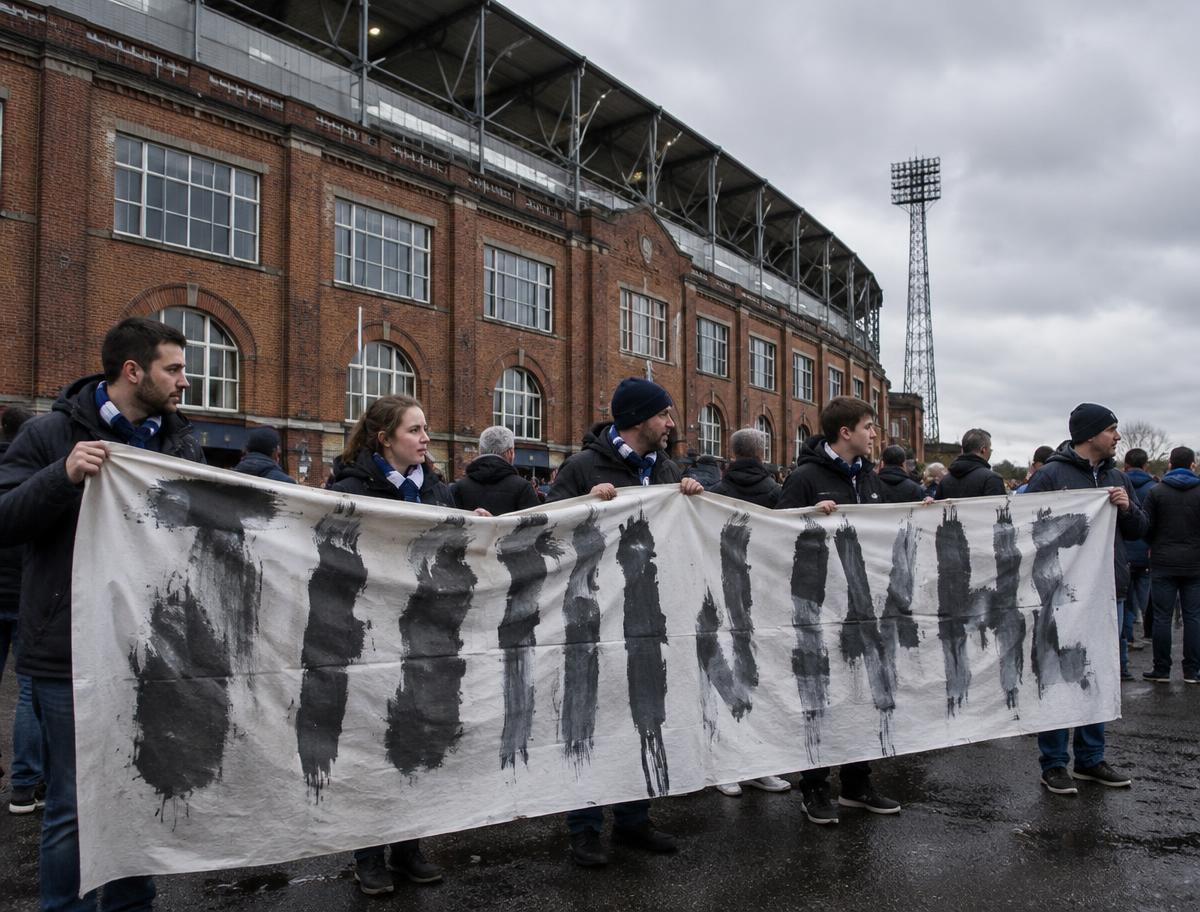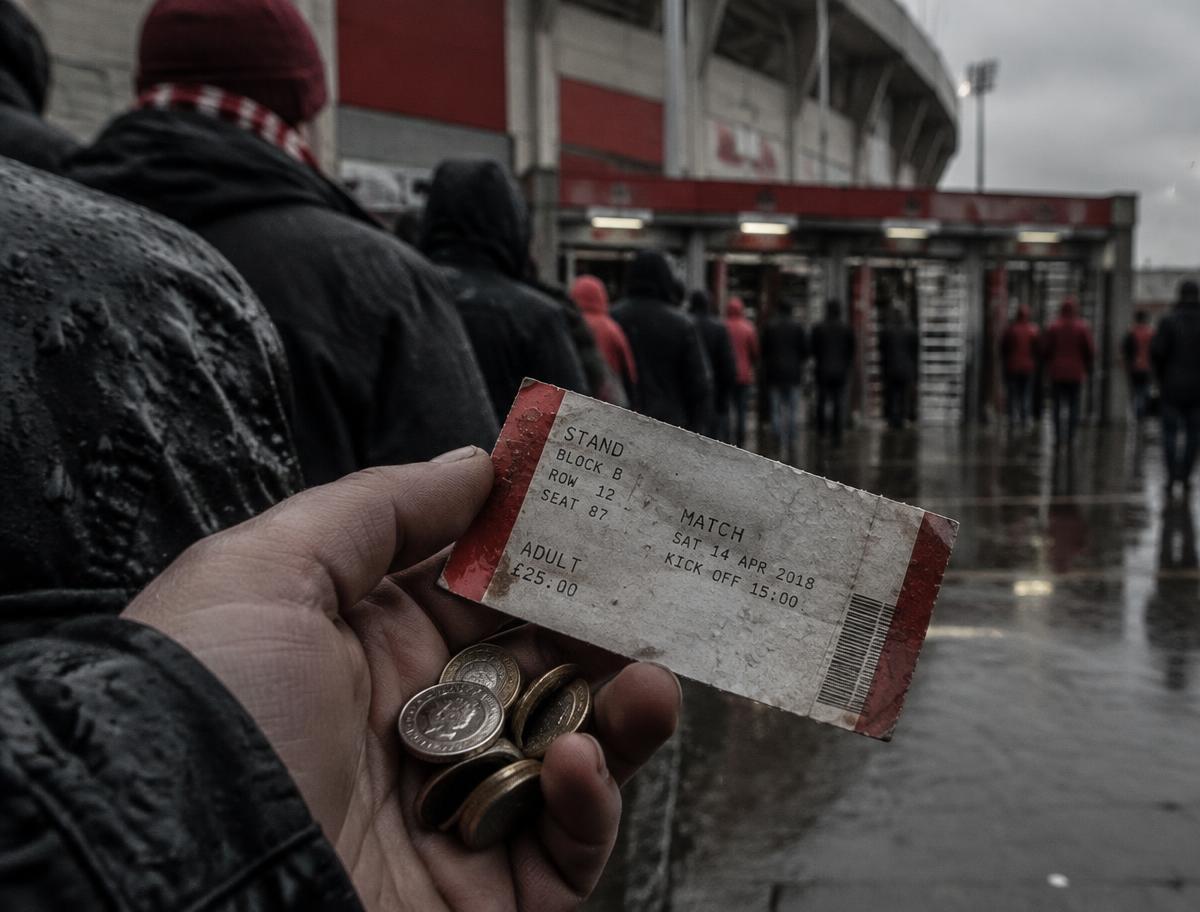
Football ownership: everyone has a plan. The fans get the bill.
Billionaires, state-backed investment, mountains of debt and multi-club empires. Football has never had more money in it — or more arguments about who it really belongs to.
Opinion — the author's argument, not news reporting
Football sells itself as a game for the people. But look behind the badge and you’ll find private-equity firms, sovereign wealth funds, billionaires, complex corporate structures and financial commitments large enough to make a transfer fee look like pocket money.
The one group guaranteed to turn up every week? The supporters.
And how much say do they actually get?
Chelsea: from one billionaire to another ownership era
Roman Abramovich’s Chelsea transformed the modern spending arms race, winning major trophies during what the club’s board called “19 successful years of ownership”. That ended in 2022 amid the political fallout following Russia’s invasion of Ukraine: the club confirmed on 30 May 2022 that Abramovich had completed the sale to an investment group led by Todd Boehly and Clearlake Capital.
That era brought enormous spending, new contracts, trophies and plenty of debate about the club’s direction. Then, in September 2026, Chelsea announced another change: Clearlake affiliates will acquire the ownership interests of Todd Boehly and Mark Walter, giving Clearlake full control.
Chelsea’s ownership story is a reminder that even a club with a huge global fanbase can see control move between the people financing it — while supporters watch from the stands.
Think about that. Two takeovers in four years, and not once did anyone ask the people in the Matthew Harding Stand to sign anything except a season-ticket renewal. Owners come with exit strategies. Fans come with no exit at all.
Manchester City: success, power and a legal reckoning
Since Abu Dhabi United Group’s takeover in 2008, Manchester City have become one of football’s dominant forces, collecting trophies and building a global football business.
But the ownership model has also raised wider questions about state-linked investment, competitive balance and the rules governing club finance.
On 29 September 2026, the Premier League announced that an independent commission had found City guilty of all charges relating to serious breaches of the league’s financial rules over a nine-season period, and of the majority of charges relating to failure to co-operate with the league’s investigation. Those are the commission’s findings; the league said the sanction will be decided separately at a further hearing. City then appealed, as the league confirmed on 2 October, and the appeal hearing is private until its outcome can be published. Nothing has yet been decided on the appeal or on punishment. The legal process matters, and its outcome must be followed — but the case has put football’s financial regulation under an extraordinary spotlight.
The question is bigger than one club: can football create rules that everyone must follow, regardless of how powerful or successful they are?
Because if the answer is no — if the rulebook bends for whoever can afford the best lawyers — then football isn’t a competition. It’s an auction with a half-time show.
Manchester United: new broom, same financial cupboard
Sir Jim Ratcliffe’s arrival brought a new face to United’s ownership story, not a clean sweep of the old one. The December 2023 agreement was for a minority investment, with INEOS delegated responsibility for football operations — not a purchase of the whole club from the Glazers. New hands on the football controls; rather more familiar hands on the share register.
And a new investor is not a debt eraser. BBC Sport’s September 2025 account of United’s financial filings described both borrowing inherited from the Glazer takeover and additional use of revolving credit. That is a dated account of the club’s finances, not a claim about Ratcliffe’s personal debts or today’s exact balance. The distinction matters: changing who helps steer the ship does not automatically pay off the mortgage on it.
United fans can reasonably want investment and competent football leadership. They can also ask why a fresh start needs so much small print. When the ownership diagram needs a half-time explainer, perhaps the most urgent signing is someone who can explain who actually answers to the supporters.
A new broom is lovely. But if the financial cupboard is still full, are you rebuilding the house — or just moving the dust somewhere the season-ticket holders can’t see?
Everton: a waterfront view is not a governance policy
The Friedkin Group completed its Everton takeover in December 2024, through Roundhouse Capital Holdings. Then came a new home: Hill Dickinson Stadium at Bramley-Moore Dock became Everton’s Premier League ground for 2025/26. New ownership, new stadium, a very substantial change of scenery.
For Evertonians, that can be a genuine reason for optimism. A waterfront home is rather more inspiring than another afternoon trying to understand a corporate ownership chart. Nobody travels to the match hoping for a thrilling second-half restructuring.
But you can move the turnstiles without moving the balance of power. Better sightlines should not mean supporters get a clearer view of decisions they still have no say in. The important question is not just whether the new owners can build a better future, but whether the fans get a seat at that conversation.
Lovely stadium. Lovely river. Now, about the less photogenic bit: accountability. A fresh postcode is not a reset button — and supporter influence ought to be more than choosing which queue to stand in.
Newcastle: hope arrives with a complicated ownership model
Mike Ashley acquired the controlling interest in 2007. For years afterwards, many Newcastle supporters felt their club was underinvested and lacked ambition. The takeover announced on 7 October 2021 by a group led by Saudi Arabia’s Public Investment Fund, alongside other investors, brought huge excitement and renewed hope.
The team’s progress has shown what new investment and a clearer sporting plan can achieve. But the takeover also raised questions about human rights, state influence and where football draws the line between commercial ownership and political power.
Newcastle supporters have every right to celebrate success. They also have every right to ask how much influence they will have over the club’s future.
Here’s the uncomfortable bit: gratitude is not a governance model. Being rescued from one owner you didn’t choose by another owner you didn’t choose is still not choosing.
Barcelona: member-owned, but not problem-free
Barcelona offers a different model. The club belongs to its members, rather than a conventional private owner. That gives it a powerful democratic tradition — but it does not make financial problems disappear.
Barcelona has faced substantial financial pressure. Its own 2024/25 annual report speaks of the club’s “ongoing economic recovery” and of “the revenue limitations imposed by the construction of the new Spotify Camp Nou”, the stadium works covered in its Espai Barça chapter. Member ownership can provide a voice, but it cannot guarantee sound finances or protect a club from the consequences of decisions made by its leadership.
Democracy is a structure. Good governance still has to do the work.
And that should sting everyone who thinks “fan ownership” is a magic spell. A vote is only as good as the scrutiny behind it. Give supporters the keys without the information, and you’ve just handed them the blame.
Real Madrid: not state-owned — and a different alternative
Real Madrid is often mentioned in the same breath as state-backed football powers, but that comparison needs correcting. Real Madrid is not state-owned: the club’s own 2024/25 Sustainability Report states that “members are the owners of the club”, and members are represented through the General Assembly of Delegate Members.
The club has combined that structure with global commercial power, sporting success and major stadium investment. Its example challenges the idea that every giant must belong to a billionaire or a sovereign wealth fund.
But even a members’ club has a question to answer: how meaningful is supporter power when most fans around the world are not voting members?
Owning a club on paper while hundreds of millions of fans worldwide just buy the shirt is a fascinating kind of democracy. Real Madrid proves billionaires aren’t compulsory. It doesn’t prove the global fanbase gets a say.
Crystal Palace: when one owner has more than one club
Multi-club ownership promises shared expertise, investment and pathways for players. But it can also put clubs in conflict when they compete in the same European competition.
In 2025, UEFA ruled that Crystal Palace could not enter the Europa League under the applicable multi-club ownership rules and accepted the club into the Conference League instead, while Lyon was admitted to the Europa League.
For Palace supporters, this was not an abstract debate about corporate structures. It affected the competition their club could enter.
If two clubs have overlapping ownership interests, whose interests come first when the rules force a choice?
Palace fans earned a place on the pitch and lost it in a boardroom spreadsheet. If that’s the future, the most important signing any club can make won’t be a striker. It’ll be a competent corporate lawyer.
Celtic: familiar roots, awkward questions
Celtic’s ownership story has a familiar face in Dermot Desmond, the longstanding Irish principal shareholder — not the club’s sole owner. BBC Sport’s account of his response to supporters in March 2021 identifies his role, his Irish background and his defence of his connection to Celtic. That is a documented example of the tension, not a claim that a new dispute has happened today.
There is something reassuring about continuity and a connection that supporters recognise. But roots are not a substitute for representation. Knowing the family history does not mean the rest of the family gets a vote on what happens next.
Celtic fans do not need the board to discover what the club means. They might quite like it to explain what the plan means. Tradition should be a foundation, not an all-purpose answer to awkward questions. You can love the same badge and still disagree about who gets to hold the cheque book.
Rangers: the 49ers connection, without the shoulder pads
Rangers confirmed new majority ownership in May 2025: a consortium led by Andrew Cavenagh and 49ers Enterprises, the sports investment arm linked to the San Francisco 49ers. The Associated Press report carried by NFL.com describes a reported 51% stake. That is not the same as saying the NFL team itself owns Rangers outright.
So, no: Ibrox has not suddenly become a quarterback training ground. The American connection is investment and management, not permission to solve a midfield problem by sending on a linebacker.
New ownership can bring hope. It also brings the same old test: investment in what, accountability to whom, and how much say for the people who were there before the deal? A transatlantic business plan still has to make sense on a wet afternoon in Glasgow.
The Old Firm can disagree about almost everything. Here is a question worth putting to both boardrooms: are supporters partners in the future, or just the atmosphere department? Different ownership stories, same unpaid job description.
The real question: who owns the football experience?
Fans are told that modern football is a global business. They are asked to accept rising ticket prices, expensive subscriptions, shirt prices and kick-off times designed around broadcasters. They are expected to travel, sing, spend and remain loyal — sometimes through years of frustration.
Yet supporters are not ordinary customers. They cannot simply switch to another club when the product disappoints. Their attachment is built on family, place, identity and generations of memories.
That gives football a special responsibility.
This is not an argument that every club should be run by a fan vote on every transfer. Clubs need professional leadership, investment and long-term planning. Nor is every private owner bad, every state-linked investor the same, or every member-owned club well run.
It is an argument for meaningful safeguards: transparent finances, clear accountability, protected supporter representation and a genuine say on decisions that could permanently change a club’s identity or future.
The owners may change. The debt may change. The manager will almost certainly change.
But the fans will still be asked to pay for the next chapter.
So here’s the provocation: if supporters are expected to fund every chapter, why are they never allowed to write a single line of it?
So who should really control football clubs?
Have your say in the FCKFIFA polls below. Vote, share the poll with fellow supporters and help make the debate bigger than one club, one owner or one season.
This is a debate about football governance, not a claim that every ownership model has the same consequences. The facts and decisions cited should be checked again before publication if material developments occur.
Sources & references
- Chelsea FC announces ownership transition — Chelsea FC, 16 September 2026
- Statement from the Board of Directors of Chelsea Football Club Limited — Chelsea FC, 30 May 2022
- Gallery: 12 years of success since 2008 takeover — Manchester City, 1 September 2020
- Premier League statement: Manchester City FC (independent Commission decision) — Premier League, 29 September 2026
- Manchester City FC appeal decision of independent Commission — Premier League, 2 October 2026
- Club history 2005–2010 — Newcastle United
- PIF, PCP Capital Partners and RB Sports & Media acquire Newcastle United Football Club — Newcastle United, 7 October 2021
- Annual Report 2024/25 (incl. Espai Barça and economic area) — FC Barcelona
- Sustainability Report 2024-2025 (section 1.2.1 Members; governance) — Real Madrid
- The CFCB First Chamber renders decision on Crystal Palace and Olympique Lyonnais — UEFA, 11 July 2025
- Manchester United PLC reaches agreement for Sir Jim Ratcliffe to acquire up to a 25% shareholding — INEOS / Manchester United, 24 December 2023
- Man Utd debt: Premier League club owe more than £1bn after latest borrowing (historical September 2025 account) — BBC Sport, 19 September 2025
- Friedkin Group completes Everton takeover — Premier League, 19 December 2024
- What's new for 2025/26: Premier League's 62nd stadium — Premier League
- Celtic: Dermot Desmond admits 'wrong calls' but vows to restore success — BBC Sport, 23 March 2021
- U.S. group including 49ers Enterprises buys majority stake of Glasgow club Rangers — Associated Press via NFL.com, 30 May 2025
Spotted an error? Tell our editors — corrections are noted at the foot of the article.